
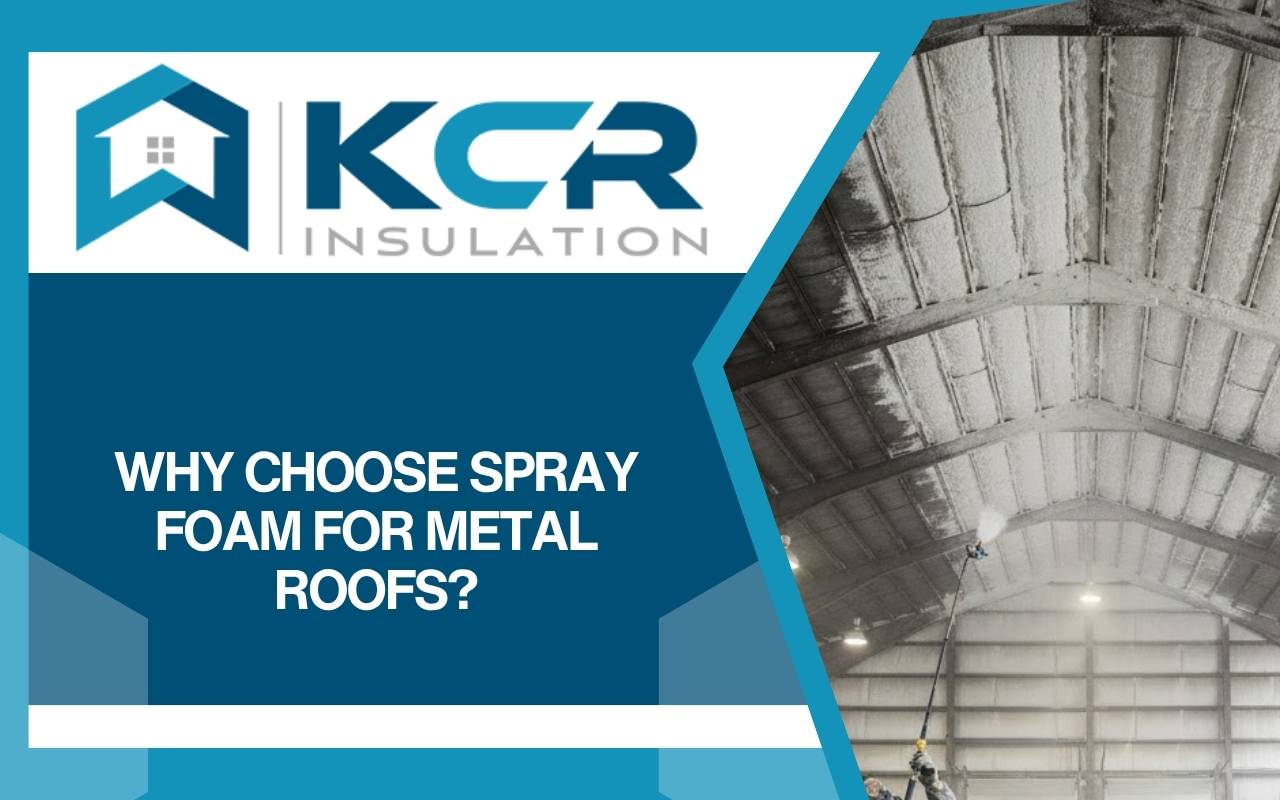
Spray foam insulation for metal roofs is becoming a go-to solution for DFW buildings dealing with leaks, noise, and hot, uneven temperatures. By sealing seams, fasteners, and tiny gaps, it protects inventory, equipment, and people from moisture and extreme weather. This guide explains how it works, what it costs, and when it makes sense for Dallas–Fort Worth metal roof owners.
Why choose spray foam for metal roofs?
It seals gaps around fasteners and seams, controls condensation at the dew point, and adds high R-value in a single application. For many DFW buildings, it stops chronic leaks without a tear-off, improves comfort, and cuts energy bills while extending the life of an aging metal roof.
Benefits of Using Spray Foam Insulation for Metal Roofs
Spray foam creates a continuous, closed-cell barrier that stops leaks and stabilizes roof temperatures in one step. It adheres tightly to metal panels, wrapping around fasteners and seams so water cannot track into your building. In DFW’s intense sun and fast temperature swings, that adhesion helps your roof handle daily expansion and contraction.
- Fills hairline cracks around loose fasteners and panel laps.
- Builds a rigid moisture barrier through strong closed-cell adhesion.
- Pairs easily with reflective roof coatings for extra UV and weather protection.
This combination improves occupant comfort, reduces noise during storms, and cuts heating and cooling loads. To explore additional advantages for different building types, review our guide on spray foam benefits and how they apply to your project.
Leaks, Condensation, and the Dew Point on Metal Roofs
Most metal roof leaks and “indoor rain” start at fasteners, seams, and an uncontrolled dew point. As temperatures change, the metal expands and contracts, slowly loosening screws and washers. Tiny gaps open around fasteners and along horizontal laps where wind-driven rain can slip into the building envelope.
- Loose fasteners and open seams allow water to bypass aging sealants.
- When roof metal drops below the dew point, warm indoor air condenses into droplets.
- Persistent moisture can stain finishes, rust panels, and damage stored materials.
Without insulation, condensation forms on the underside of cool metal panels and drips onto floors, tools, and inventory. A properly applied foam layer warms the underside of the roof, narrows the temperature difference, and keeps the surface above the dew point so water vapor cannot condense.
How Spray Foam Works on Different Roof Slope Conditions
During installation, two liquid components mix at the spray gun and expand into foam that bonds to the metal surface within seconds. The closed-cell structure blocks air pathways while resisting water absorption even on a low slope where water may pond briefly around fasteners.
Because foam adheres firmly and cures in place, it follows every contour, slope change, and penetration on the roof. It wraps around ridge caps, curbs, skylights, and vents, eliminating the small gaps that are hard to seal with tapes or mastics. On steeper slopes, its tenacious adhesion keeps the cured foam locked onto the panels despite gravity and wind uplift.
How to Prepare Your Metal Roof for Spray Foam
A clean, sound surface is critical for long-term adhesion and performance. These steps help DFW owners prepare their roofs before installation:
- Schedule a professional roof inspection. Confirm panel condition, slope, rusted areas, and active leaks that need repair before foaming.
- Remove loose debris and failing roof coatings. Sweep, wash, and lightly abrade as needed so fresh foam can bond directly to the metal.
- Address rust and weak metal. Replace badly corroded panels, tighten or replace stripped fasteners, and spot-prime rusted spots per manufacturer guidance.
- Check interior moisture sources. Improve ventilation and reduce indoor humidity so the roof system is not overloaded at the dew point.
- Select compatible roof coatings. Plan the protective topcoat that will shield the foam from UV rays and extend service life.
Cost and ROI of Foam on DFW Metal Roofs
Project cost depends mainly on roof size, access, slope, and existing damage. Taller buildings, complex penetrations, or heavily rusted panels require more prep and may use more foam to build a consistent thickness. In many cases, owners still spend less than they would on a full tear-off and new roof system.
- Square footage and average thickness of the foam layer.
- Roof slope, number of penetrations, and edge details.
- Condition of existing panels, fasteners, and prior roof coatings.
- Chosen roof coating system and local labor rates.
Over time, lower energy bills and fewer leak-related service calls improve the return on investment. If you are deciding whether a structure is worth insulating at all, compare scenarios using the insights in Should You Insulate a Metal Building?.
Professional Installation in Dallas–Fort Worth
Closed-cell foam chemistry, hose temperature, and spray technique must all be dialed in for consistent adhesion. Experienced DFW installers begin by cleaning the roof, addressing weak fasteners, and verifying dry surfaces before spraying. They then apply foam in passes, checking thickness with gauges or test cuts as they move across the slope.
Professional crews also understand how dew point, wind, and sun exposure affect foam quality. They schedule work to avoid condensation on panels and protect nearby vehicles or neighboring properties from overspray. Once the foam cures, they apply compatible roof coatings to guard against UV breakdown and weathering.
Maintenance Tips After Foam and Roof Coatings
Foam and roof coatings require far less maintenance than many systems, but periodic checks preserve their performance. A short seasonal routine can add years of useful service life.
- Inspect at least twice a year. Walk the roof in spring and fall to look for coating cracks, impact damage, or exposed foam around edges and penetrations.
- Clear debris from drains and low areas. Leaves, branches, or equipment parts can trap water and stress both the foam and roof coatings.
- Repair small defects promptly. Touch up scuffs, minor blisters, or coating wear with manufacturer-approved materials before they grow.
Maintaining proper indoor humidity and ventilation also reduces moisture load on the system. For smaller structures, pairing these practices with design ideas from insulating metal sheds and workshops keeps roofs, contents, and tools in better condition.
Case Studies: DFW Metal Roof Owners
One Arlington, TX manufacturing facility struggled with leaks around warehouse fasteners. After installing spray foam and adding reflective roof coatings, the recurring drips stopped, and the owner reported roughly 20% lower HVAC costs in the first year. Workers noticed more stable temperatures near loading areas and overhead equipment.
A retail space in Plano faced severe condensation that damaged inventory and ceiling finishes. Foam application raised the interior roof surface temperature above the dew point and blocked air paths at panel laps. Water drips stopped, and the owner recouped the investment in under two years through lower utility bills and avoided emergency repairs.
Enhancing Energy Efficiency in DFW Buildings
Foam turns a corrugated metal roof into a continuous thermal and air barrier. In hot summers, it reduces heat transfer from the sun-exposed slope; in cooler months, it limits heat escaping through thin metal panels and fastener lines. This stable envelope makes it easier for HVAC systems to maintain target temperatures.
When combined with reflective roof coatings, foam helps flatten temperature spikes on both the roof surface and inside the building. That means fewer hot and cold zones, reduced run time for equipment, and less risk of condensation when indoor humidity rises. To compare long-term efficiency against other options, you can review Spray Foam vs Batt Insulation for Metal Buildings.
Frequently Asked Questions
Is my metal roof a good candidate for foam in DFW?
Most structurally sound metal roofs can be upgraded with foam instead of replaced. If panels are intact, fasteners can be tightened or replaced, and heavy rust is limited, foam usually adapts well. A site visit helps confirm details like slope, access, and existing roof coatings before you move forward with a proposal.
How much does a foam retrofit typically cost per square foot?
Pricing often falls within a mid-range between simple roof coatings and full replacement. Square footage, roof height, slope, and required foam thickness all affect cost. Including both insulation and leak repair in one system usually shortens payback, especially on climate-controlled warehouses, showrooms, or workshops that run HVAC year-round.
Will foam work with my existing roof coatings?
Yes, as long as the existing coatings are firmly bonded and compatible with the new system. Installers typically remove loose or peeling material, prime as recommended, and then apply foam. In other cases, coatings are applied after the foam to create a layered system that shields it from UV and weather.
How disruptive is installation for an operating business?
Most projects allow you to keep operating while crews work on the roof. Because foam is sprayed from above, interior disruptions are minimal. Your contractor may schedule the noisiest work for off-peak hours and coordinate around sensitive inventory or equipment that could be affected by vibration or temporary odors.
How do I schedule a spray foam inspection for my building?
The simplest way is to request an on-site roof evaluation. Share basic information—roof size, age, slope, and any known leaks—then set a time for a walkthrough. You can start that process now by using our contact form to schedule a spray foam roof inspection in DFW and discuss options for your building.
Transforming DFW Metal Roofs with Spray Foam
Spray foam insulation for metal roofs offers a practical path to stop leaks, control condensation, and cut energy waste without a full replacement. When professionally installed and maintained, it strengthens aging panels, stabilizes indoor comfort, and extends roof life. For many Dallas–Fort Worth owners, foam turns a noisy, leaky metal roof into a quieter, more efficient asset.
References
- Closed-Cell Spray Foam to Offer Significant Benefits to Metal Buildings – Spray Foam Magazine.
- Spray Polyurethane Foam: A Key Component to Any Net Zero Solution – Roofing Magazine.