
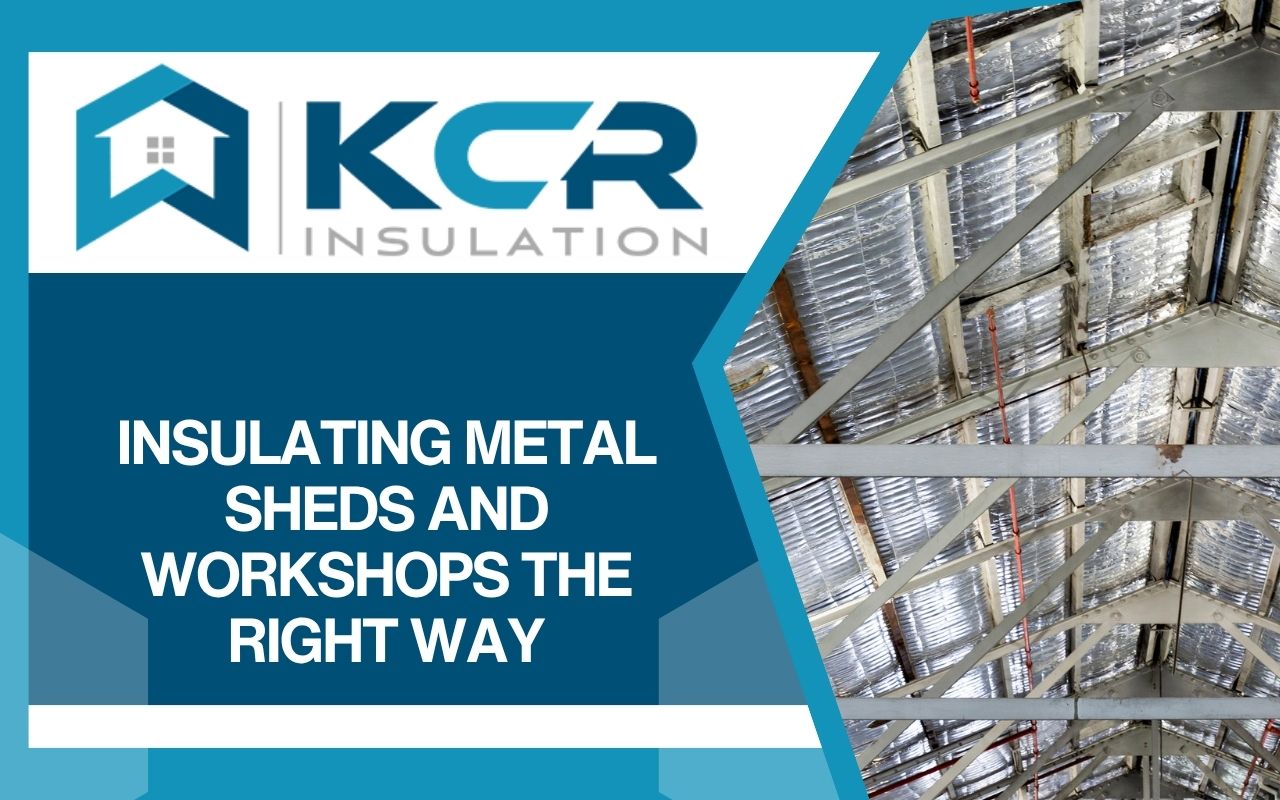
If you rely on a metal shed or workshop for storage, hobbies, or work, proper insulation can transform it from a basic structure into a usable, year-round space. Insulating metal sheds and workshops protects your equipment, reduces temperature swings, and prevents moisture damage, no matter the season.
As part of effective garage and metal building insulation, this upgrade adds long-term value to your property while making your shed or shop more comfortable and efficient.
Why Insulate Your Metal Shed or Workshop?
Extreme Temperature Fluctuations
Metal buildings heat up quickly in summer and get extremely cold in winter. Without insulation, the structure becomes uncomfortable and difficult to use for any extended period.
Insulation creates a thermal barrier that limits heat transfer through walls and roofs, maintaining more stable indoor conditions.
Moisture and Condensation Control
When warm air meets cold metal, condensation forms. This can lead to rust, mold, and warped materials. Insulation helps regulate surface temperature and reduce moisture buildup that threatens tools and stored items.
What to Know Before You Insulate
Not all insulation materials work equally well in metal structures. Sheds and workshops often have unique layouts with exposed framing and large metal surfaces, so the insulation must provide both thermal and air sealing properties.
Spray foam insulation is a common solution because it adheres tightly to metal and fills gaps without leaving air pockets. Other options include rigid foam boards and fiberglass, though they may require additional sealing or vapor barriers.
Top Benefits of Insulating Metal Sheds and Workshops
Adding proper insulation to a metal structure offers many advantages:
- Temperature Stability – Keeps heat out in summer and traps warmth in winter
- Tool and Equipment Protection – Prevents rust, corrosion, and moisture damage
- Lower Noise Levels – Dampens sound from both inside and outside
- Better Work Conditions – Makes the space more usable for long hours or year-round use
- Energy Efficiency – Reduces heating and cooling costs when climate control is added
Best Practices for Installation
Before insulating, it’s important to prepare the space. Seal any visible cracks, gaps, or joints with caulk or expanding foam to prevent air leaks. Then apply your chosen insulation material, focusing on full coverage of walls, ceilings, and entry points like doors and windows.
In humid climates, adding a vapor barrier can help prevent moisture problems over time. Finishing the walls with drywall or paneling adds a clean, protected surface.
FAQs About Garage and Metal Building Insulation
Can I insulate a small metal shed?
Yes, even small sheds benefit from insulation. It helps regulate temperature and protects stored items from moisture and heat damage.
What’s the best insulation for workshops?
Closed-cell spray foam works best for workshops due to its high R-value and moisture resistance. It’s especially useful in metal buildings.
Will insulation make the shed quieter?
Yes, insulation reduces sound transfer, making it quieter to work inside and less noisy for nearby neighbors.
Improve Your Space With Metal Shed and Workshop Insulation
Whether you’re storing tools or creating a workspace, insulating metal sheds and workshops gives you more control over temperature, sound, and moisture. With the right materials and installation, your structure becomes a more comfortable and valuable part of your property.
Contact KCR Insulation today to learn more about how garage and metal building insulation can enhance your shed, workshop, or utility space.