
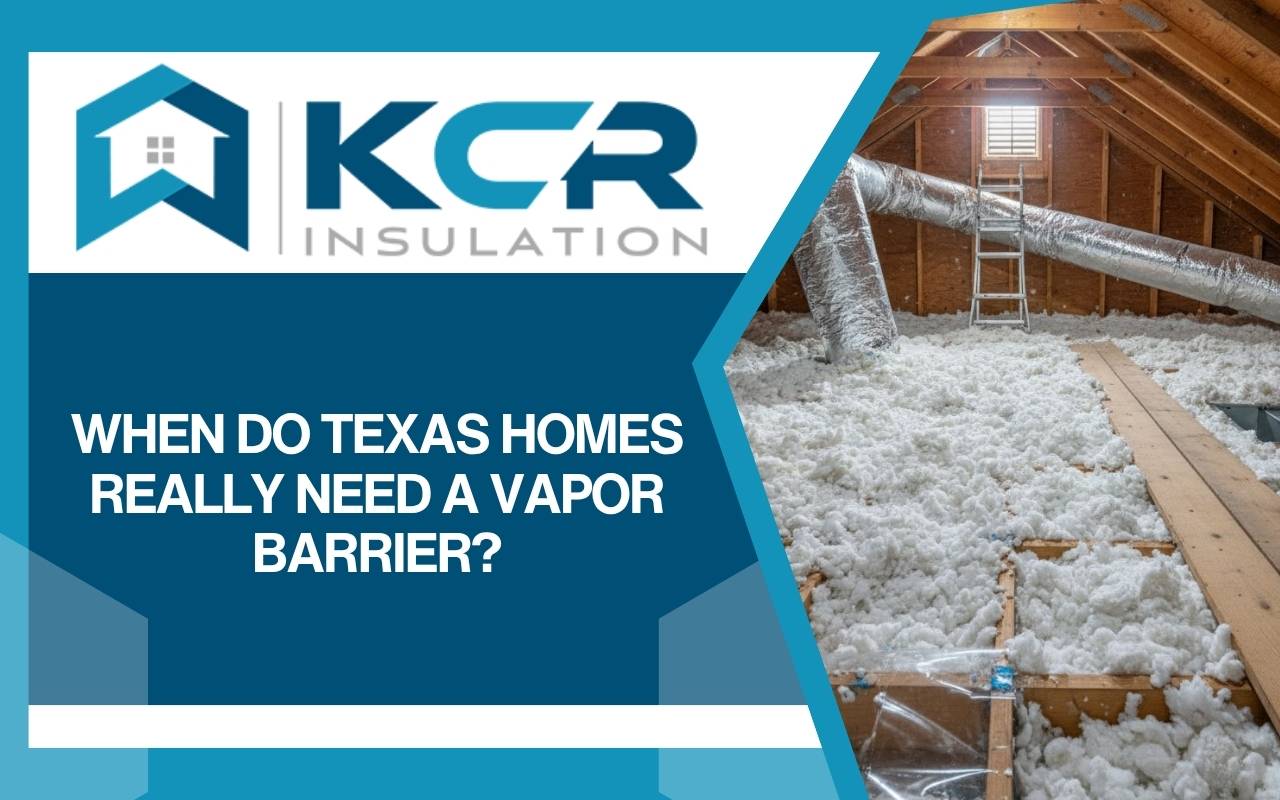
Vapor barrier texas climate decisions matter for every DFW homeowner who faces months of heat, humidity, and sudden storms. Moist air constantly pushes toward cooler indoor surfaces, looking for weak spots in walls, attics, and crawl spaces. Understanding that movement helps you design a home that stays drier, more efficient, and more comfortable all year for families in North Texas.
When do Texas homes really need a vapor barrier?
Most Texas homes need vapor control, but not always a plastic sheet on every wall. You need it most where humid outdoor air meets cooled surfaces: crawl spaces, rim joists, some wall systems, and roof assemblies. A local pro can match materials to your climate zone 3 home so assemblies still dry safely.
Texas climate zone 3 and moisture basics
North Texas sits in climate zone 3, where long cooling seasons and high outdoor humidity dominate. Air conditioning keeps interior surfaces cool, while warm, moist air presses inward. When that humid air contacts cooler surfaces, condensation can form inside walls, attics, and crawl spaces, especially where air leaks are uncontrolled.
In this region, moisture control is about balance. You want assemblies that block most vapor and bulk water from entering, yet still allow safe drying in at least one direction. Building scientists caution that highly restrictive interior vapor layers in hot-humid climates can trap moisture and damage enclosures if not designed carefully.
What is a vapor barrier in home construction?
A vapor barrier (or vapor retarder) is a thin material layer that slows water vapor as it moves through building assemblies. Common products include plastic sheeting, foil facings, specialized membranes, or coated papers. They are chosen based on their “perm” rating, which describes how easily water vapor can pass through by diffusion.
The goal is to limit vapor reaching cold surfaces where it can condense. By placing the right material on the correct side of the insulation, you help keep framing, drywall, and insulation drier and more durable over time.
- Helps keep wood framing and drywall dry over the long term.
- Supports insulation so it maintains its rated R-value and performance.
- Reduces hidden mold and mildew growth inside walls and ceilings.
Importance of vapor control in DFW climate
Outdoor humidity across DFW is often high and continually pushes moisture toward cooler, air-conditioned interiors. Without a moisture control layer, vapor can accumulate in cavities and attic spaces, slowly warping wood, peeling finishes, and degrading insulation. A thoughtful vapor barrier texas climate design helps redirect moisture to safe drying paths.
Vapor control works best when paired with smart air sealing. Air leaks can carry far more moisture than diffusion alone. Combining vapor control with targeted sealing, ventilation, and right-sized HVAC helps stabilize indoor humidity, improve comfort, and cut energy waste while protecting against long-term structural damage.
Types of vapor retarders: Class I, II, and III
Builders and energy experts group materials as class I/II/III vapor retarders based on perm rating. This classification tells you how strongly each material resists vapor diffusion and helps you avoid trapping moisture where it cannot safely dry.
- Class I: Very low-perm materials such as polyethylene sheet or some foils that block almost all vapor.
- Class II: Moderately resistant materials like kraft facings or certain membranes that slow vapor but still allow some drying.
- Class III: More vapor-open products, including many paints and building wraps, which allow greater drying potential.
In warm and mixed-humid regions, experts often recommend avoiding interior Class I layers in favor of Class II or III options. This provides needed control while keeping a safe drying direction for walls and roof assemblies in climate zone 3.
Vapor barrier placement in key parts of the house
Good vapor barrier texas climate planning starts by looking at how moisture and temperature behave in each part of your home. Crawl spaces see ground moisture rising; walls manage indoor humidity from daily living; and attics handle warm, moist air that wants to escape upward into roof framing.
Crawl spaces and slabs
In crawl spaces and under slabs, water vapor often rises from the soil. A tough plastic sheet over the ground or under the concrete is essential to limit that source. Pairing this with professional crawl space spray foam can further seal rim joists and floor framing, improving comfort and reducing odors.
Walls and ceilings
Walls and ceilings must handle moisture from cooking, bathing, and laundry, plus outdoor humidity pushing inward. Many DFW homes benefit from a moderately tight vapor retarder combined with continuous air sealing and carefully detailed joints. Solutions such as air sealed insulation help control both vapor and air movement through these assemblies.
Attics and roof assemblies
Attics face intense solar heat, duct leakage, and rising indoor moisture. Uncontrolled air leaks can carry large amounts of vapor to the roof deck. Combining selective spray foam at critical areas with targeted attic air sealing helps manage vapor while creating a more stable, efficient thermal boundary.
How to plan vapor control for your DFW home
Use this roadmap before adding plastic, foam, or new insulation.
- Identify visible issues such as condensation, musty odors, staining, or comfort complaints in specific rooms.
- Document each assembly (crawl space, walls, roofline, and attic) with photos and notes about materials and ventilation.
- Confirm bulk water control first: review grading, gutters, roof leaks, plumbing, and shower or laundry areas.
- With a pro, choose suitable class I/II/III vapor retarders that match your siding, sheathing, and interior finishes.
- Integrate air sealing, balanced ventilation, and HVAC sizing so humidity control supports your moisture strategy.
- Ask your contractor to explain your vapor barrier texas climate plan in plain language and provide annual checkup options.
Impact of vapor control on energy efficiency
Moisture management and energy performance are closely linked. When air and vapor move freely through gaps in walls and ceilings, cooled indoor air escapes while hot, humid outdoor air enters. Your HVAC system must then work harder to maintain comfort, using more energy and wearing out faster.
- Reduces drafts and temperature swings between rooms and floors.
- Keeps insulation dry so it delivers the R-value you paid for.
- Lowers stress on heating and cooling equipment, which can extend system life.
Maintaining vapor barriers for long-term performance
Once installed, vapor control layers are not entirely “set and forget.” While they are mostly hidden, accessible areas such as attics, basements, and crawl spaces should be inspected every few years for tears, gaps, sagging, or disturbed sections caused by other trades.
Small repairs prevent big moisture problems later. When you remodel, plan how new wiring, ductwork, or plumbing will pass through control layers. Seal new penetrations with compatible tapes, gaskets, or spray foam, and confirm that exhaust fans and attic ventilation still operate as designed.
Roofline foam and attic moisture management
Roofline foam can be a powerful tool in DFW homes when designed correctly. Applied to the underside of the roof deck, it creates an air-impermeable layer that blocks humid air from reaching cooler roof surfaces. That reduces condensation risk and helps protect the roof deck and attic insulation over time.
However, roofline foam must be paired with smart moisture strategies. In hot-humid climates, designers consider diffusion, attic conditioning, and ventilation pathways to prevent humidity from lingering in encapsulated spaces. Combining roofline foam with professional attic air sealing and carefully planned HVAC supply or dehumidification can create a durable, comfortable unvented attic.
Frequently Asked Questions
1. Do all DFW homes need plastic vapor barriers?
No. Many climate zone 3 homes use more flexible vapor control strategies instead of continuous interior plastic. The best approach depends on wall layers, siding, and attic design. For tailored guidance, you can request a moisture and insulation review through the contact page.
2. How can better vapor control improve my comfort quickly?
Improved vapor control reduces sticky indoor air, temperature swings, and rooms that feel clammy after the AC turns off. Upgrades that combine sealing and insulation, such as air sealed insulation, often deliver noticeable comfort gains and utility bill savings within the first season.
3. What should I do if my crawl space smells musty?
Musty odors suggest high moisture and potential mold. A good next step is to control soil vapor and seal gaps at the floor. Scheduling an inspection and considering solutions like crawl space spray foam can address both moisture and comfort in rooms above.
4. Is roofline foam right for my Texas attic?
Roofline foam can improve comfort and efficiency, but it must be designed for your roof, duct layout, and humidity levels. A pro should evaluate ventilation, diffusion paths, and existing insulation. If you are considering this change, start by asking for an attic assessment through the contact page.
5. Who can help design insulation for Texas climate?
Because Texas homes face intense heat and humidity, it is helpful to work with specialists who understand local building science. Reviewing options on the insulation for Texas climate page and then requesting a consultation can guide you toward the right mix of air sealing, insulation, and vapor control.
Ensuring comfort and durability in Texas homes
Effective moisture control in the DFW region protects building materials, boosts energy performance, and makes everyday living more comfortable. A well-planned vapor barrier texas climate strategy, combined with professional air sealing and insulation upgrades, helps your home stand up to heat waves, humidity, and storms without hidden damage.
To explore whole-home solutions, you can review services like insulation for Texas climate and then connect with local experts through the contact page to design a plan tailored to your house.
References
- Millions of Texans lack home weatherization that can save energy, lives – Texas Climate News.
- Smart Vapor Retarders Explained by a Building Science Pro – Fine Homebuilding.