
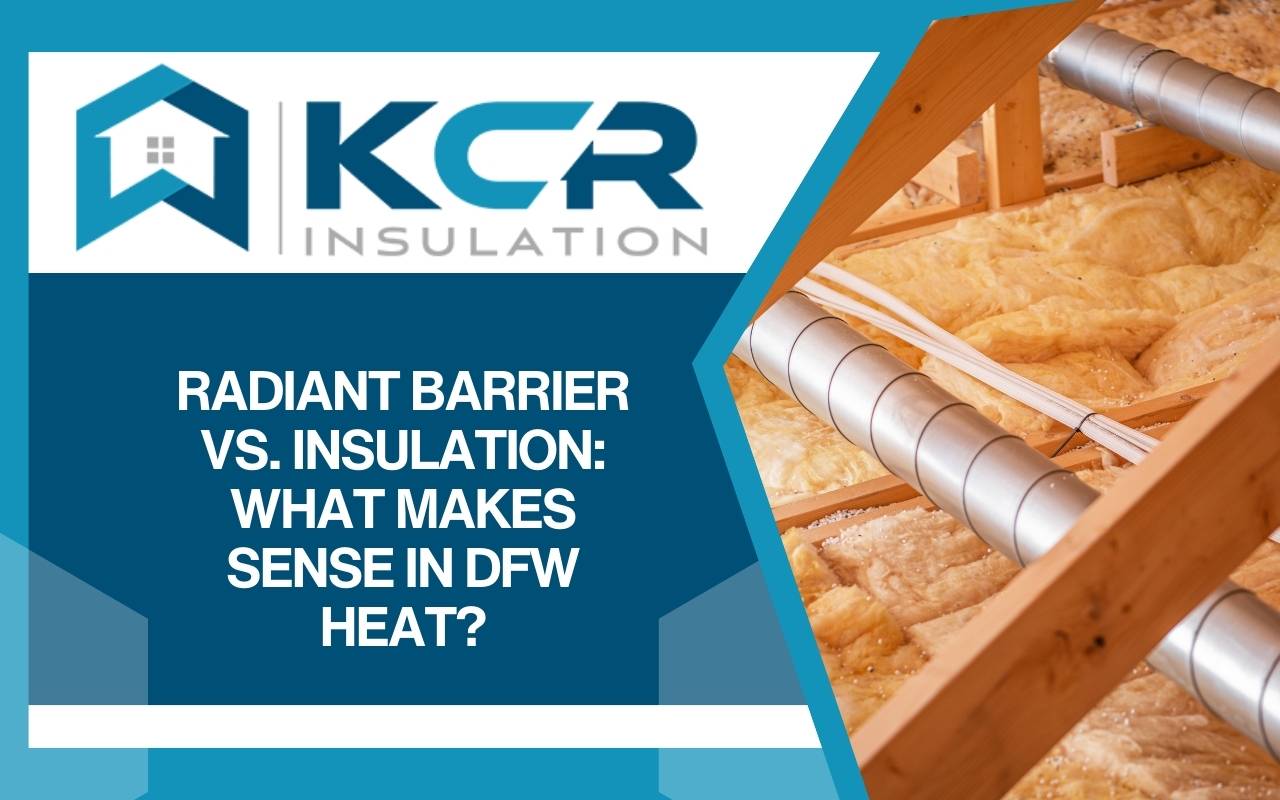
In the sweltering heat of a typical DFW summer, where temperatures soar, keeping a home cool is challenging. For homeowners in Mesquite, finding the best way to combat attic heat gain is essential. You may wonder about radiant barriers and insulation. But when it comes to radiant barrier vs insulation, which option makes sense? This article explores both approaches to help you make an informed decision.
Understanding Radiant Barriers
Radiant barriers are reflective sheets, often aluminum foils on kraft paper or plastic film, designed to reduce radiant heat transfer. In the comparison of radiant barrier vs insulation, radiant barriers target radiation heat flow. They reflect up to 97% of radiant energy when installed correctly. A radiant barrier can drop attic temperatures by 20–30°F in summer, lowering cooling costs. However, they perform best with good ventilation and proper insulation R-value.
- Reflect up to 97% of radiant energy
- Work best with proper attic ventilation
- Can reduce attic temperatures significantly
For more details about installation services, visit our services page.
The Science Behind Insulation
Insulation combats heat transfer mainly through conduction resistance. Materials such as fiberglass, cellulose, and spray foam trap air pockets to slow heat flow. R-value measures its effectiveness. In hot DFW summers, proper insulation is crucial for keeping indoor spaces cool. While insulation blocks some radiant heat, it mainly prevents conduction from attic to living spaces.
- Fiberglass batts are affordable and easy to install
- Blown-in cellulose provides even coverage
- Spray foam seals gaps and adds strength
Emissivity: Key Factor in Radiant Barriers
Emissivity measures how well a surface emits thermal radiation. Radiant barriers usually have emissivity values as low as 0.03, reflecting most radiant energy. In radiant barrier vs insulation discussions, emissivity explains why foil can outperform other materials. A low emissivity radiant barrier helps maintain cooler attics and reduce air-conditioning loads.
R-Value: The Insulation Metric to Consider
R-value indicates how effectively insulation slows conductive heat flow. Higher R-values mean better insulation. In DFW, attic insulation recommendations range from R-30 to R-60. Achieving these values lowers attic heat transfer. Insulation alone does not reflect radiant heat, but it is essential for conduction resistance.
Installation Process of Radiant Barriers
Installation begins with attic inspection. Foil should face an air gap for maximum reflection. Installers attach radiant barrier sheets across rafters while maintaining airflow. Correct placement prevents heat leaks and ensures performance. Professional installation in Mesquite homes often takes only a few hours.
Installation Process of Insulation
Insulation starts with sealing air leaks. Then, homeowners select batt, loose-fill, or spray foam. Batt insulation requires precise fitting. Loose-fill and spray foam adapt to irregular spaces. Professionals ensure correct vapor barrier placement to avoid moisture issues. The goal is always to reach the recommended R-value.
Cost Analysis: Radiant Barriers vs. Insulation
Radiant barriers are thin, affordable, and sometimes DIY-friendly. They quickly reduce attic temperatures, especially in DFW climates. Insulation usually requires more material and labor but provides benefits year-round. Many homeowners find that combining radiant barriers and insulation gives the best value.
Effectiveness Comparison in DFW Heat
DFW summers bring intense radiant heat. Radiant barriers reflect much of this energy before it warms the attic. Insulation helps after heat has already entered. Relying on insulation alone may still leave attics above 140°F. Combining radiant barriers with insulation reduces energy use and cooling costs.
Choosing the Right Solution for Your Home
The choice depends on your attic’s condition, energy goals, and budget. If insulation already meets recommendations, a radiant barrier can provide added benefits. If insulation levels are low, improving R-value should come first. Many homeowners benefit from a professional assessment to decide on the best approach.
FAQs About Radiant Barrier vs. Insulation
How does a radiant barrier differ from insulation?
A radiant barrier reflects heat away, while insulation slows conductive heat transfer into living spaces.
Can I install both radiant barriers and insulation together?
Yes. Combining both often delivers the best results in reducing attic heat and lowering cooling costs.
Does a radiant barrier replace the need for insulation?
No. Insulation is still necessary for conduction control. A radiant barrier complements insulation.
How long does installation usually take?
Professional installation of radiant barriers or insulation usually takes a few hours to one day.
Where can I get expert help for my attic?
You can reach out through our contact page for professional guidance.
Optimal Cooling Solution for DFW Homes
Choosing radiant barrier vs insulation is not always a simple decision. In fact, combining both can maximize comfort and savings. A radiant barrier reflects radiant energy, while insulation adds conduction resistance. Together, they provide a powerful shield against the DFW summer heat. Explore our services to find the best option for your home.