
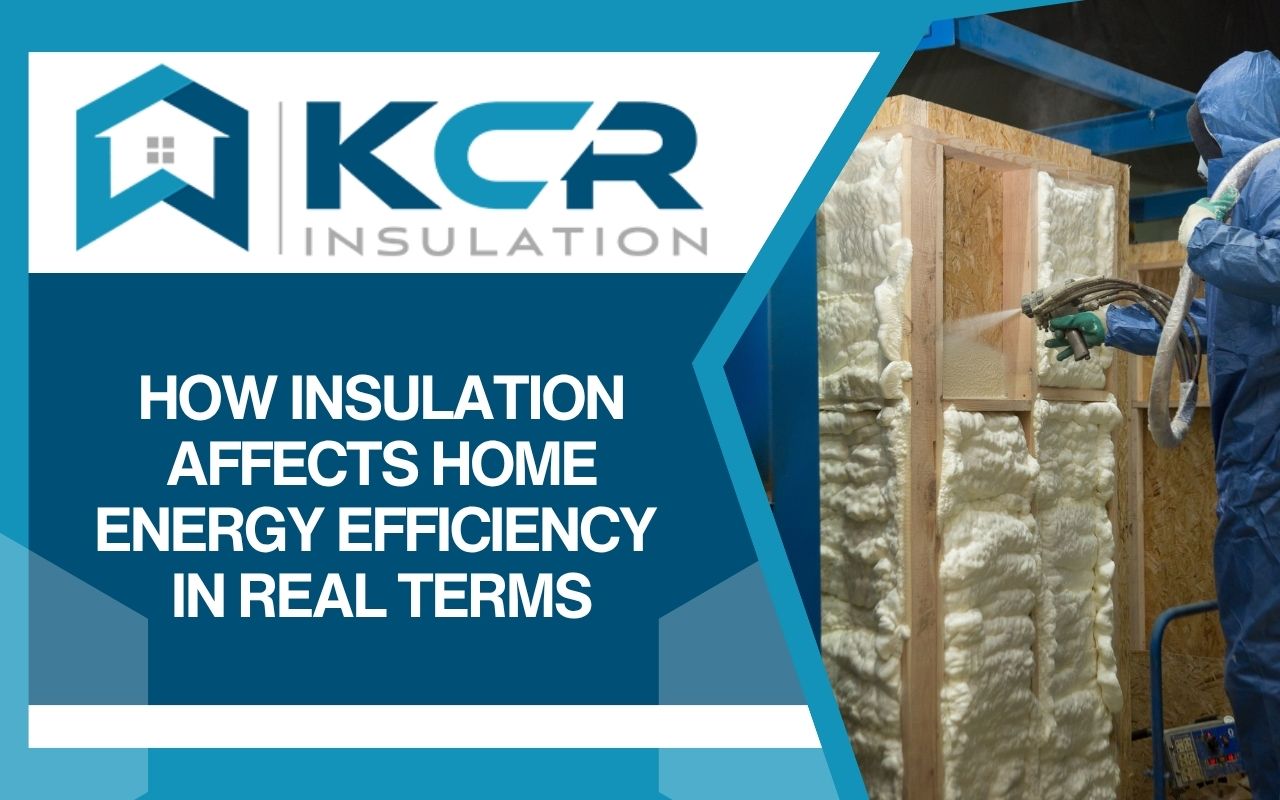
How insulation affects home energy efficiency comes down to how well it slows heat flow and prevents air leakage. The right insulation keeps your house warmer in the winter, cooler in the summer, and easier on your utility bills.
Among the different types available, spray foam insulation is one of the most effective materials for improving overall performance and comfort. But what exactly is spray foam insulation, and why does it stand out?
What Is Spray Foam Insulation?
A High-Performance Seal for Your Home
Spray foam insulation is made by combining two liquid components that expand on contact and fill gaps in walls, attics, and crawlspaces. Once cured, it forms a solid barrier that blocks heat transfer, seals air leaks, and even deters moisture.
Compared to traditional options, it creates a tighter envelope around your home. If you’re curious how it stacks up, check out this helpful breakdown: Is spray foam insulation better than fiberglass?
How Insulation Affects Energy Efficiency
Reduces Heating and Cooling Demands
Without proper insulation, your HVAC system has to work harder to keep your home comfortable. This leads to increased energy use and higher bills. Spray foam is especially good at regulating indoor temperatures because it reduces both conduction and air leakage.
Minimizes Air Infiltration
Air leaks allow conditioned air to escape and outside air to creep in. Spray foam fills every crevice, acting as both insulation and an air sealant. This cuts down on drafts and hot/cold spots inside your home.
Improves HVAC Performance
When your home is better insulated, your HVAC system runs more efficiently and lasts longer. This not only lowers costs but also improves indoor comfort. For more insight, see how spray foam improves indoor comfort.
Advantages of Spray Foam for Energy Savings
Spray foam insulation may have a higher upfront cost, but it pays for itself in energy savings over time. Here’s why more homeowners are making the switch:
- Lower Monthly Utility Bills
- Improved Year-Round Comfort
- Fewer HVAC Repairs
- Higher Resale Value for Homes
For tips on choosing the right type, explore this guide to the best spray foam insulation for homes.
FAQs About Energy Efficiency and Insulation
How much can insulation reduce energy bills?
Depending on your home and climate, good insulation—especially spray foam—can reduce heating and cooling costs by 15% or more.
Is spray foam good for both hot and cold climates?
Yes. It works in any climate by sealing leaks and minimizing heat transfer, keeping indoor temps stable.
Does insulation make a difference in older homes?
Absolutely. Older homes often have gaps, drafts, and outdated insulation. Upgrading can lead to major improvements in comfort and efficiency.
Boost Your Energy Efficiency with Smart Insulation
Understanding how insulation affects home energy efficiency is the first step toward saving money and living more comfortably. Spray foam offers long-term results that outperform traditional materials—especially when installed by experts.
Contact KCR Insulation today to schedule an evaluation and take the next step toward a more efficient home.