
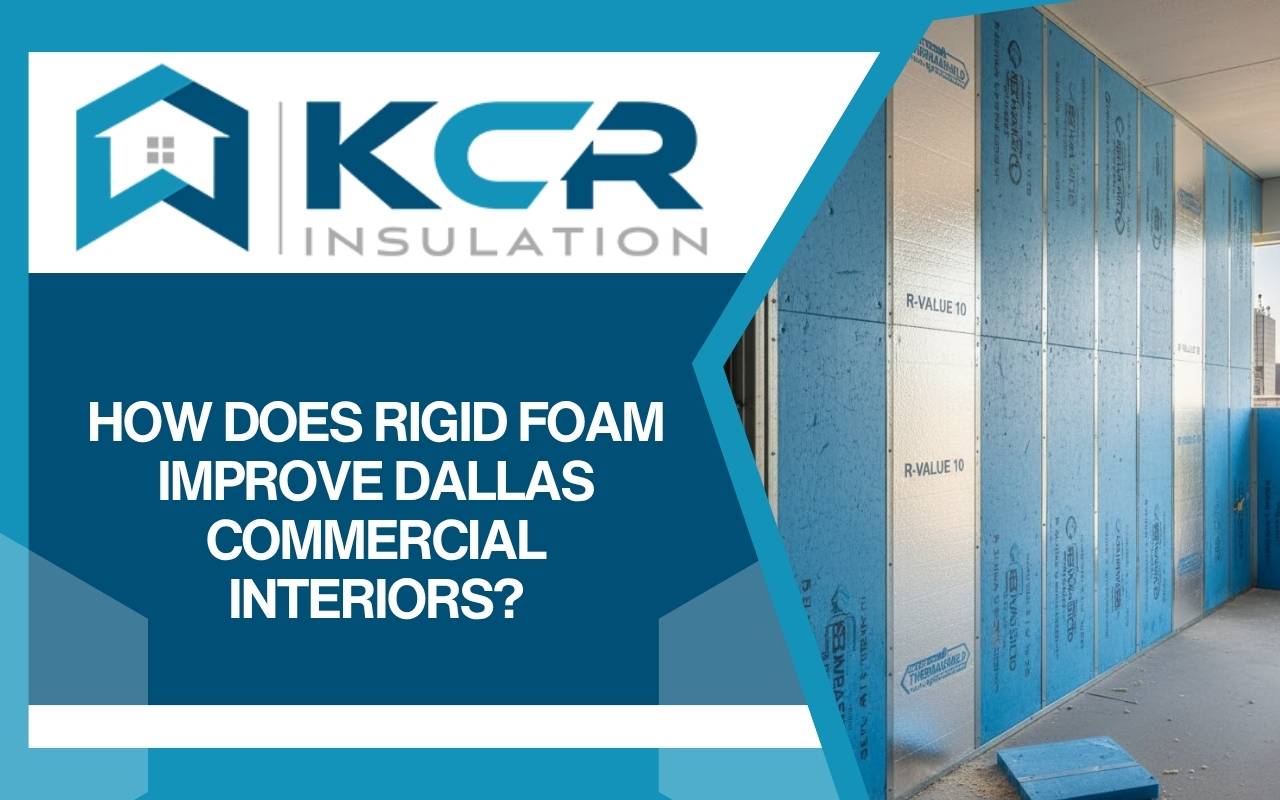
Rigid foam boards are a powerful tool for shaping quieter, more efficient commercial interiors in Dallas. By adding thermal comfort, sound control, and moisture resistance behind drywall, they help busy buildings feel calmer and more consistent. In markets like North Texas, commercial rigid foam insulation Dallas helps owners balance comfort, code compliance, and acoustic control in one system every day.
How does rigid foam improve Dallas commercial interiors?
Rigid foam boards add thermal comfort, noise control, and moisture resistance in a thin layer behind drywall. When you combine commercial rigid foam insulation Dallas with rated wall assemblies and careful detailing, you support efficient energy use, quieter rooms, and smooth inspections for offices, retail spaces, hotels, and other busy interiors.
Understanding rigid foam in Dallas interiors
Rigid foam panels are light, closed-cell boards that slow heat flow and resist moisture. They stay firm over time, so they do not sag or settle inside commercial wall and ceiling systems. Installed behind gypsum board or another interior finish, they add stiffness and help surfaces stay flat, which keeps corridors and tenant spaces looking clean and professional.
For project teams, rigid foam delivers a high level of performance in a relatively thin layer, freeing up rentable floor area while still supporting comfort and energy goals. It also pairs well with metal studs, concrete, and masonry, which makes it a flexible choice across offices, retail shells, and hospitality interiors.
Beyond thermal performance, rigid foam helps reduce sound transfer between rooms and corridors. Its closed-cell structure breaks up vibration, which is especially helpful in busy parts of Dallas where traffic and rooftop equipment can add unwanted background noise.
Building codes, fire rating, and permits in Dallas
Local and national building codes shape every commercial interior. Dallas typically references the International Building Code (IBC) along with local amendments, so designs must show how insulation supports required fire rating, energy targets, and structural performance. Inspectors often review R-values, wall assemblies, and documentation during plan review and site visits.
Because commercial rigid foam insulation Dallas is usually classified as foam plastic, plans must explain how it will be protected and where it appears in each wall or ceiling. Clear drawings and product data make it easier for reviewers to confirm compliance before construction begins.
- Verify which code edition and local amendments apply to your project.
- Show insulation location, thickness, and R-value in wall, floor, and roof details.
- Document tested wall assemblies that maintain required fire rating with foam plastic.
- Align permit submittals so structure, mechanical systems, and insulation all support the same code path.
Early coordination with design teams and the authority having jurisdiction helps prevent permit delays and supports faster approvals for tenant build-outs and new construction.
Fire safety standards and interior finish requirements
Fire safety is central in any commercial interior. Foam plastic can ignite when left exposed, so codes generally require a protective thermal barrier on the occupied side. In many assemblies this means a layer of rated gypsum board or another approved interior finish that shields the foam from direct flame and high heat.
A properly detailed wall assembly is designed so the protective layer, framing, and insulation all work together to slow flame spread and smoke development, keeping exit routes usable for as long as possible. To support that goal, project teams should confirm that foam products carry appropriate ASTM and UL fire test data and that they are installed only in tested or engineered assemblies.
During construction, inspectors will confirm that foam is fully covered from floor to ceiling, penetrations are sealed, and joints are finished correctly. Clear coordination between general contractors, interior trades, and inspectors reduces rework and helps protect occupants and property over the long term.
How furring channels improve comfort and durability
Furring channels form the backbone of many rigid foam interior systems. These light-gauge metal members attach to the structure and create a stable plane that can support both insulation and finishes. The small cavity between the framing and the finish layer provides a predictable space for boards, wiring, and moisture protection.
By slightly separating gypsum board from structural studs, furring channels also help control vibration and improve acoustic performance across the assembly.
- Create a uniform plane that helps walls stay straight and visually consistent.
- Provide space for rigid foam boards, services, and membranes without crowding the stud cavity.
- Enhance sound control by decoupling the finish layer from primary framing.
- Support long-term durability by limiting cracks, fastener pops, and uneven surfaces.
When coordinated with shop drawings and manufacturer guidelines, these channels make installation more predictable and reduce call-backs after tenants move in.
Acoustic NRC values in commercial interiors
Noise Reduction Coefficient (NRC) describes how much sound a material absorbs on a scale from 0 to 1. Higher NRC numbers typically mean better absorption and less echo. While rigid foam itself often has modest NRC performance, it significantly supports acoustic NRC goals when combined with decoupled framing, resilient channels, and high-absorption ceiling and wall finishes.
In Dallas offices, clinics, and hotels, careful acoustic NRC planning can improve speech clarity, reduce distractions, and support privacy between adjacent spaces. Designers often compare NRC values across different ceiling tiles, wall panels, and complete assemblies so they can match performance to each room’s use, from quiet focus areas to active lobbies.
Practical applications in Dallas commercial spaces
Rigid foam boards adapt to many commercial conditions, particularly where space is tight but performance expectations are high. Teams choose commercial rigid foam insulation Dallas for interior walls, ceilings, and retrofit conditions where they need thin, high-performance boards that cut easily and fit around existing services.
In tenant improvement projects, rigid foam can also complement exterior solutions. When both sides of the wall use foam, designers may coordinate with rigid foam exterior insulation so interior and exterior assemblies work together to meet energy and comfort goals.
- Interior partitions behind drywall in offices, retail build-outs, and medical suites.
- Corridor and meeting room ceilings where sound control is a priority.
- Raised floors above mechanical or storage zones to temper noise and heat.
- Retrofit work in older buildings with uneven or narrow wall cavities.
Coordinating these applications with a trusted commercial insulation contractor in Dallas helps ensure detailing, phasing, and inspections all align with local expectations.
Enhancing comfort and serenity through noise control
Acoustic comfort has become a core part of modern commercial design. Rigid foam inside walls and ceilings helps reduce sound transmission between rooms, while acoustic ceiling tiles, wall panels, and soft furnishings help manage reverberation within the space. Together, these layers create quieter backgrounds and a more controlled soundscape.
When thermal and acoustic comfort are addressed at the same time, occupants experience fewer distractions from drafts, hot spots, or disruptive noise, which supports productivity and overall well-being. This is especially valuable in fast-moving environments like call centers, clinics, and hospitality properties across the Dallas–Fort Worth region.
Frequently Asked Questions
Who should I contact to evaluate rigid foam for my Dallas project?
Start with a local specialist who understands regional codes and commercial interiors. You can contact our insulation team to review drawings, discuss acoustic goals, and compare insulation options before you finalize your permit set.
Can rigid foam be combined with spray foam in the same building?
Yes, many projects pair interior boards with targeted spray foam in harder-to-reach areas. Coordinating details with a qualified commercial spray foam contractor in Dallas ensures continuity of the air barrier and consistent performance across the entire envelope.
How does rigid foam affect inspection timelines?
Clear documentation of assemblies, thicknesses, and protection methods usually helps inspections move faster. When plans and field conditions match, officials can quickly verify that insulation, fire barriers, and finishes follow the approved permit set.
Is rigid foam suitable for interior retrofits in occupied spaces?
Yes, rigid boards are often a good fit for phased retrofits because they can be cut to size and installed from one side of the wall. Proper planning limits disruption for tenants while still improving comfort and performance.
What information should I send with my permit application?
Include wall sections showing insulation location, manufacturer data sheets, and any tested assemblies you plan to use. Sharing this information early gives reviewers a clear picture of your design strategy and reduces the chance of permit comments related to insulation or fire performance.
How to specify rigid foam for Dallas interiors
Following a simple, repeatable process makes it easier to integrate rigid foam into commercial interiors while meeting local expectations.
- Define thermal, acoustic, and moisture objectives for each space type and occupancy.
- Confirm applicable codes, including energy and fire requirements for foam plastic products.
- Select rigid foam type, density, and thickness based on R-value and performance targets.
- Coordinate furring channels, framing, and interior finishes so the complete assembly works together.
- Collect product data sheets and tested assemblies to support permit submittals.
- Work with a local contractor to verify constructability, phasing, and inspection steps before installation.
References
- How to Specify Rigid Insulation — Architect Magazine – Overview of rigid insulation types, applications, and selection factors for commercial buildings.
- Exterior Rigid Insulation Best Practices — U.S. Department of Energy – Research-backed guidance on using rigid foam to improve energy performance and durability in building envelopes.