
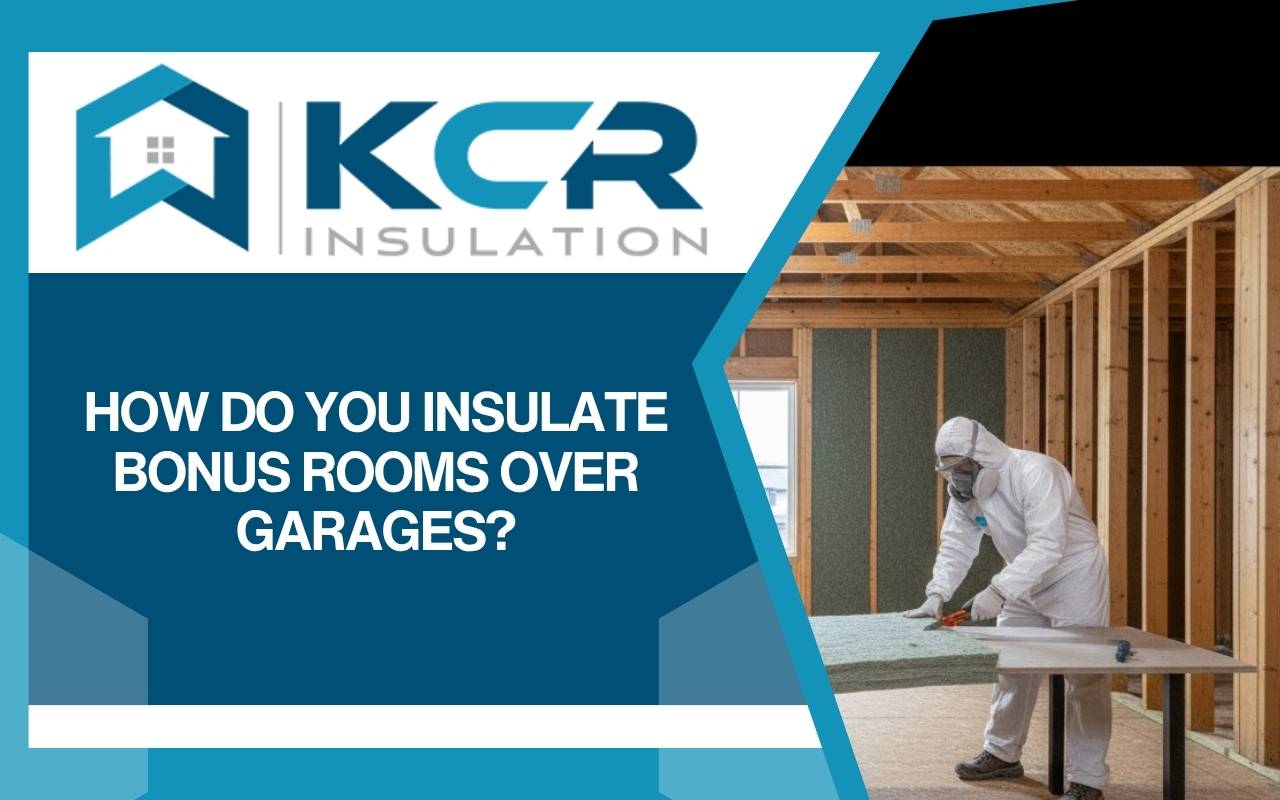
Planning a new bonus room over the garage or a larger family room addition? Thoughtful insulation for home additions keeps these spaces from turning into a sauna in summer or an icebox in winter. With the right design for floors, walls, and mechanical systems, you can enjoy year-round comfort without wasting energy or straining equipment at home, season after season.
How do you insulate bonus rooms over garages?
To insulate a bonus room effectively, treat it as its own mini building. Combine targeted insulation for home additions with sealed cantilever floors, continuous thermal breaks, properly sized mini-split equipment, and durable air barriers. When these pieces work together, rooms over garages feel as comfortable and efficient as the rest of your home.
Understanding comfort challenges in home additions
New rooms built over or beside a garage usually sit more exposed to outdoor temperatures than the original house. They heat up fast in summer, cool down quickly in winter, and often share walls or floors with unconditioned areas. The result can be a beautiful space that family and guests avoid because it never feels quite right.
Common issues include:
- Rooms above garages resting on unconditioned, often very hot or very cold spaces.
- Exposed cantilever floors that allow cold or hot air to move directly under the finished floor.
- Weak or missing thermal breaks where framing touches exterior surfaces.
- Gaps in air sealing that let outdoor air leak around windows, outlets, and baseboards.
Most comfort complaints trace back to how the new structure meets the elements and how well it controls heat, air, and moisture movement.
Why insulation matters in added living space
Skipping or under-sizing insulation for home additions leads to rooms that always seem a few degrees off from the rest of the house. Without enough protection, walls, ceilings, and floors behave like partly open windows, letting conditioned air escape and outdoor air creep inside.
Good insulation helps you:
- Reduce hot and cold spots from season to season.
- Lower heating and cooling costs by easing the load on HVAC equipment.
- Limit sound transfer between floors and from the garage below.
- Protect finishes by reducing condensation risk inside walls and ceilings.
To compare materials and R-values, review the types of insulation for residential properties that best match your climate and project.
Solving drafts from cantilever floors
Cantilever floors extend beyond the main wall line and often hide open cavities that leak air. Even when the room feels warm overall, your feet may stay chilly because cold or hot air moves freely under the floor framing. Addressing this detail can dramatically improve comfort.
Key steps include:
- Seal visible cracks at rim joists and along the floor edges with durable, flexible sealant.
- Install rigid foam board or dense insulation between joists at the overhang to slow heat transfer.
- Tape seams and joints with weather-resistant building tape to create a more continuous layer.
- For finished spaces, have a contractor apply retrofit spray foam to close hidden voids and gaps.
After upgrades, recheck the area during very hot or cold weather. If floors still feel uncomfortable, additional sealing or insulation may be needed under the garage ceiling.
Improving thermal breaks for better efficiency
Thermal bridges are places where framing or structural components connect indoor and outdoor surfaces directly. These spots bypass insulation and allow heat to move quickly, creating cold or hot streaks on walls, floors, and ceilings.
You can strengthen thermal breaks by:
- Adding insulated sheathing outside wall framing to separate wood or steel from exterior cladding.
- Installing foam strips or gaskets between framing and concrete, steel, or masonry surfaces.
- Extending insulation continuously over structural members where building codes allow.
- Pairing thermal breaks with solid air sealing so heat cannot ride along hidden air currents.
Better thermal breaks not only improve comfort and energy performance, they also reduce the chance of condensation and mold in cold corners and along framing lines.
Designing continuous air barriers
While insulation slows heat transfer, air barriers control actual air movement that carries heat, cold, and moisture. In additions and bonus rooms, a continuous air barrier is crucial to blocking drafts and protecting the structure.
Common air barrier materials include house wrap, rigid foam boards with sealed joints, and liquid-applied or sheet membranes. For best results:
- Run the air barrier in an unbroken line across walls, ceilings, and floor transitions.
- Seal every seam, penetration, and material change with compatible tapes and sealants.
- Pay extra attention around windows, doors, attic hatches, and knee walls.
When a high-quality air barrier pairs with insulation and good thermal breaks, the room’s shell becomes tight, stable, and easier to condition in any season.
Right-size mini-split systems for additions
Mini-split heat pumps are popular in home additions and over-garage rooms because they provide targeted heating and cooling. However, mini-split sizing is just as important as insulation and air sealing. Undersized units struggle on extreme days, while oversized systems short-cycle and leave the space humid and uneven.
A professional load calculation that accounts for room size, ceiling height, orientation, window area, and insulation levels gives the most accurate capacity. Once you know the load, you can:
- Choose equipment with appropriate heating and cooling output for your climate zone.
- Compare efficiency ratings and comfort features, such as variable-speed compressors.
- Ensure refrigerant lines, condensate drains, and electrical work are installed to manufacturer specifications.
When right-sized equipment pairs with a well-sealed envelope, the mini-split can maintain steady temperatures without running constantly or short-cycling.
Innovative insulation solutions above garages
Rooms above garages face big temperature swings because the space below is seldom conditioned. Basic fiberglass batts in the floor often cannot manage the difference between a hot garage and a cooled bonus room. In many projects, insulation for home additions above garages means upgrading materials and strategy.
Common improvements include:
- Applying closed-cell spray foam to the underside of the garage ceiling for high R-value and built-in air sealing.
- Adding rigid foam panels beneath the garage ceiling before installing new drywall to build a stronger thermal layer.
- Upgrading wall and knee-wall insulation with dense-packed materials to reduce heat flow and noise.
To better understand how the garage impacts the rest of your home, explore the benefits of insulating your garage and consider targeted garage spray foam insulation for stubborn problem areas.
How to improve comfort in bonus rooms
A few systematic steps can turn a drafty, rarely used bonus room into a favorite gathering spot. Use this checklist before you commit to major insulation for home additions or new HVAC equipment.
- Check for obvious air leaks. On windy or very hot/cold days, feel around windows, doors, baseboards, and outlets for drafts.
- Seal cracks and gaps with caulk, foam, or weatherstripping to stop uncontrolled air movement.
- Evaluate floor, wall, and ceiling insulation and upgrade thin or damaged areas to recommended R-values.
- Confirm mini-split sizing and settings, adding smart or programmable controls for precise scheduling.
- Plan phased improvements, starting with the worst comfort issues and considering professional insulation upgrades for long-term efficiency.
Frequently Asked Questions
How much does it cost to insulate a room over the garage?
Costs vary with room size, existing construction, and material choices. Because insulation for home additions can involve floors, walls, ceilings, and mechanical upgrades, most homeowners start with an in-home assessment and written estimate. A local specialist can prioritize improvements so you address the biggest comfort and energy issues first.
Can I skip insulation and just install a mini-split?
You can add a mini-split without improving the envelope, but it usually leads to higher operating costs and uneven comfort. A well-sealed, insulated room needs less capacity and cycles more efficiently. Many homeowners choose to upgrade insulation and air sealing first, then right-size the equipment for the improved space.
Do I need to insulate the garage itself?
In many homes, treating the garage as part of the system helps a lot. Insulating the garage ceiling and key walls can reduce temperature swings in the room above and cut noise from vehicles and tools. Reviewing the benefits of insulating your garage can clarify how much impact this step could have.
How long until I notice lower energy bills?
Some homeowners see smaller energy bills in the first full season after air sealing and insulation upgrades. The exact timeline depends on your starting point, climate, and thermostat habits. Combining envelope improvements with efficient equipment and smart controls typically delivers the fastest, most noticeable savings.
When should I call a professional insulation contractor?
If you experience extreme temperature differences, persistent drafts, or signs of moisture, it is time to bring in an expert. A qualified contractor can inspect framing, cantilever floors, thermal breaks, and air barriers, then design a plan that fits your budget and comfort goals.
Case studies: transformed over-garage rooms
One family in a cold climate added a large bonus room over a two-car garage and found it nearly unusable in winter. After installing closed-cell spray foam under the garage ceiling, improving wall insulation, and adding a properly sized mini-split, they reported far fewer drafts and significantly lower heating costs.
In a warm, humid region, homeowners retrofitted leaky cantilever floors with rigid foam and carefully taped seams, then upgraded thermal breaks between exterior sheathing and framing. Comfort improved immediately, and humidity complaints dropped. These projects highlight how treating floors, walls, and mechanical systems as a single, connected design delivers lasting comfort.
Creating cozy and functional spaces
By addressing cantilever floors, thermal breaks, mini-split sizing, and air barriers together, you can rescue rooms that once felt like an afterthought. With smart insulation design, high-quality materials, and careful installation, your bonus room or new addition can become one of the most comfortable, flexible spaces in your home.
When you are ready to explore tailored options, you can schedule an insulation consultation with our team to discuss solutions that match your home, climate, and budget.
References
- When to insulate above a garage and when to avoid – Homes & Gardens.
- Does Insulating Over a Garage Save Energy? – Today’s Homeowner.