
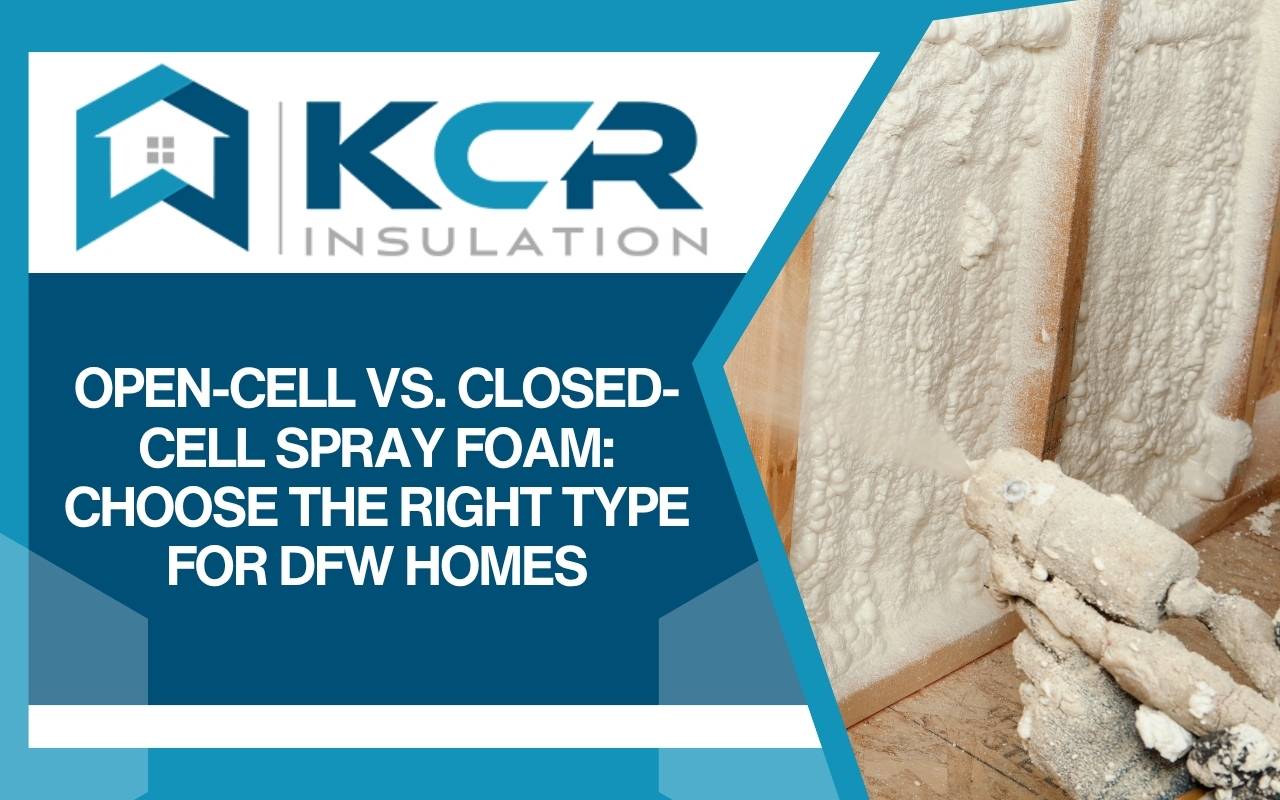
In the quest for a comfortable and energy-efficient home, choosing the right insulation is essential. When evaluating spray foam insulation open vs closed cell, homeowners in the Dallas-Fort Worth area face important decisions. Each option provides unique advantages in density, air sealing, and vapor permeability. Understanding these distinctions ensures your home performs at its peak for years to come.
Both foam types effectively seal homes but do so differently, influencing energy efficiency and durability. Knowing which one suits your DFW property depends on project goals and structure. For expert installation and guidance, visit the insulation company in Dallas TX page to learn more about tailored solutions.
Differences in Structure and Composition
Open-cell and closed-cell foams vary greatly in structure, affecting thermal efficiency and density. Open-cell foam features unsealed cells, forming a soft, sponge-like material. With a density around 0.5 pounds per cubic foot, it’s ideal for filling irregular gaps and voids. In contrast, closed-cell foam contains fully sealed cells, creating a rigid and dense structure that enhances wall and roof strength.
- Open-cell: lighter and more flexible
- Closed-cell: denser and adds structural integrity
- Both provide strong adhesion and insulation when properly applied
When comparing spray foam insulation open vs closed cell, density and structure determine R-value, flexibility, and long-term performance. These characteristics form the foundation for selecting insulation that fits DFW’s diverse housing needs.
Air Sealing Capabilities
Both foam types outperform traditional insulation at stopping air movement. Closed-cell foam offers a nearly perfect air barrier due to its rigid composition. However, open-cell foam easily conforms to irregular shapes, sealing tight spaces effectively. When analyzing spray foam insulation open vs closed cell, both significantly reduce drafts, yet closed-cell slightly excels in airtightness due to its impermeable structure.
- Closed-cell: superior airtightness
- Open-cell: flexible sealing in hard-to-reach areas
- Both reduce energy loss and improve comfort
Moisture Management
Moisture control is essential in DFW’s humid climate. Closed-cell foam doubles as a vapor barrier, making it perfect for basements or rooflines prone to moisture. Open-cell foam, however, allows vapor to pass, promoting drying and preventing mold. Understanding how spray foam insulation open vs closed cell manages humidity ensures lasting indoor air quality and durability.
Thermal Insulation Efficiency
Closed-cell foam delivers an R-value between 6 and 7 per inch, maximizing thermal resistance where space is limited. Open-cell foam provides about 3.5 to 4 per inch, but its expansive coverage minimizes thermal bridging. Considering spray foam insulation open vs closed cell, both improve energy performance depending on application needs.
Cost Considerations
Open-cell foam is generally more affordable due to its lower density and ease of installation. Still, its lower R-value might require additional thickness. Closed-cell foam costs more upfront but includes vapor and air sealing benefits. When evaluating spray foam insulation open vs closed cell, long-term savings often offset initial investments.
Long-Term Durability
Closed-cell foam offers outstanding structural strength and moisture resistance, maintaining form over time. Open-cell foam remains flexible, adapting to building movements without cracking. Both resist pests and mold, ensuring consistent performance. Comparing spray foam insulation open vs closed cell, closed-cell typically delivers longer life in high-stress conditions.
Compatibility with DFW Climate
Dallas-Fort Worth’s climate presents both heat and humidity challenges. Closed-cell foam’s low vapor permeability makes it ideal for rooflines exposed to intense sunlight. Conversely, open-cell foam’s breathability supports interior drying during cooler months. Evaluating spray foam insulation open vs closed cell helps determine which performs best across DFW’s seasonal shifts.
Installation Process Variations
Open-cell foam expands up to 100 times its liquid form, filling awkward cavities with ease. Installers must control overspray to maintain consistency. Closed-cell foam requires higher pressure and precision spraying, offering a solid bond to decking. Both techniques, when done by professionals like those at spray foam insulation services, ensure quality and efficiency.
- Open-cell expands significantly for full coverage
- Closed-cell hardens quickly for durability
- Professional application ensures consistent results
Maintenance Requirements
Once cured, both foam types need minimal upkeep. Closed-cell foam resists compression and damage, while open-cell foam maintains flexibility. Occasional visual inspections help detect minor issues early. Whether you choose open or closed-cell, rely on experts from the contact KCR Insulation page for reliable maintenance advice.
FAQs about Spray Foam Insulation
What is the main difference between open-cell and closed-cell spray foam?
Open-cell foam is soft and flexible, while closed-cell foam is dense and rigid, offering higher R-value and vapor resistance.
Can open-cell foam be used for roof insulation?
Yes, open-cell foam works well for interior applications, but closed-cell is often preferred for rooflines due to its moisture barrier properties.
Which foam type is more energy-efficient?
Closed-cell foam provides higher R-value per inch, enhancing energy efficiency, especially in areas with limited wall depth.
Is spray foam insulation suitable for DFW’s humidity?
Both types perform well in DFW. Closed-cell blocks moisture, while open-cell allows interior drying, preventing trapped humidity.
Do I need maintenance after installation?
Routine checks are recommended, but both types require little maintenance. If issues appear, professionals can reapply small sections easily.
Choosing the Ideal Spray Foam Type
Deciding between open-cell and closed-cell foam depends on budget, energy goals, and structure type. Closed-cell foam offers superior strength and insulation, while open-cell provides flexibility and affordability. For expert assistance, reach out through the contact page to discuss which option fits your Dallas-Fort Worth home best. You can also explore the insulation services for more insights and professional recommendations.