
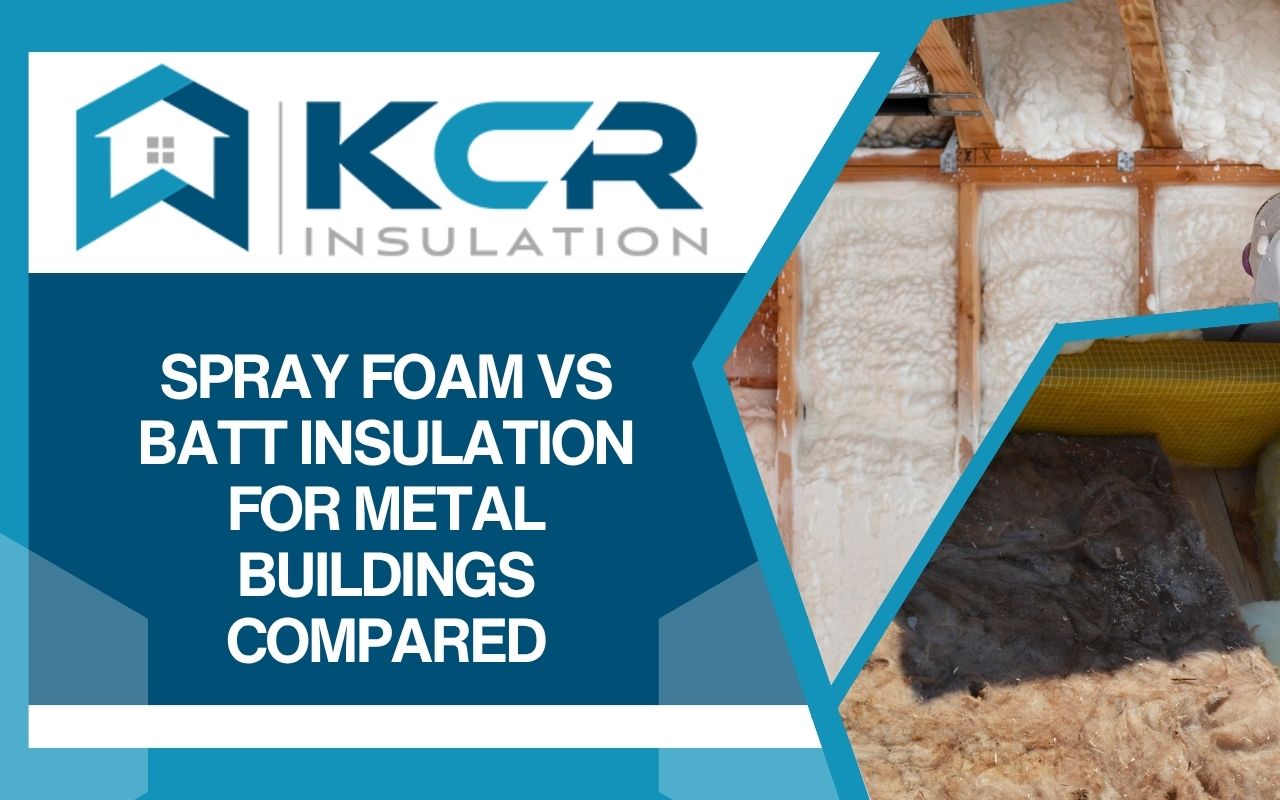
When it comes to insulating metal structures, many property owners compare spray foam vs batt insulation for metal buildings. While both options serve the same purpose—temperature control and energy savings—they work very differently and deliver different results.
Whether you’re insulating a detached garage, a workshop, or a storage facility, choosing the right solution can impact comfort, efficiency, and maintenance over time. That’s why it’s important to understand how each material performs in garage and metal building insulation.
Why Insulation Matters in Metal Buildings
Metal buildings are especially prone to temperature swings, moisture buildup, and air leaks. Without insulation, they can become unbearably hot in summer and freezing in winter. Insulating not only improves indoor comfort but also protects stored equipment and reduces long-term wear on the building itself.
Spray Foam vs Batt Insulation: A Breakdown
Both materials offer value, but they differ in performance, application, and durability. Here’s how they compare:
- Air Sealing
Spray foam expands and seals gaps automatically. Batt insulation requires a separate vapor barrier and often leaves small air leaks. - Moisture Control
Closed-cell spray foam resists moisture and mold. Batt insulation can absorb moisture if not properly protected. - R-Value Per Inch
Spray foam has a higher R-value per inch, especially in tight or oddly shaped spaces. Batt insulation performs best in standard wall cavities. - Installation
Spray foam requires professional application but covers surfaces completely. Batt insulation is easier for DIY but more prone to errors. - Durability
Spray foam lasts longer and doesn’t sag or shift over time. Batt insulation may settle or compress, reducing its effectiveness.
Which Insulation Is Best for Metal Buildings?
If your priority is long-term performance, airtight sealing, and moisture protection, spray foam is often the better choice. It works especially well in garages, barns, and shops where sealing and durability are key.
However, batt insulation can be a cost-effective solution in less extreme environments or for smaller, simple structures—especially if you’re on a tight budget.
Use Cases for Each Type
- Choose Spray Foam If:
You need high R-value, moisture resistance, and full sealing in a large or exposed structure. - Choose Batt Insulation If:
You have a small, low-humidity space and want a quicker or more affordable installation.
FAQs About Garage and Metal Building Insulation
Which lasts longer in a metal building?
Spray foam generally lasts longer due to its rigid structure and resistance to sagging and moisture.
Is batt insulation enough for metal garages?
It can work in mild climates, but it may struggle in extreme heat or cold without extra sealing.
Does spray foam really prevent condensation?
Yes. Spray foam provides an air and moisture barrier that helps prevent interior condensation on metal surfaces.
Choose the Right Insulation for Long-Term Comfort
Deciding between spray foam vs batt insulation for metal buildings depends on your goals. Spray foam offers more protection, efficiency, and longevity, while batt insulation provides a more budget-friendly option for basic needs.
Contact KCR Insulation today to find the best solution for your building and get expert help with your garage and metal building insulation project.